What is a Commercial Food Warmer?
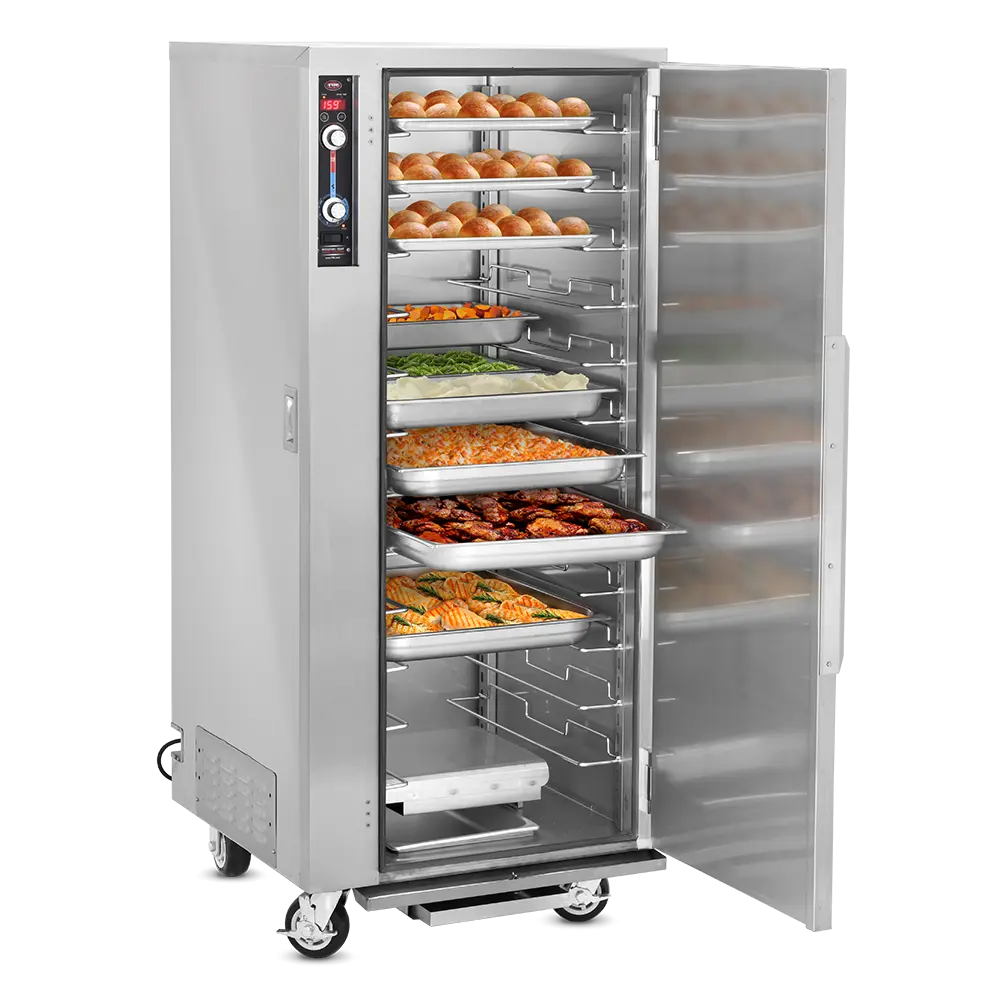
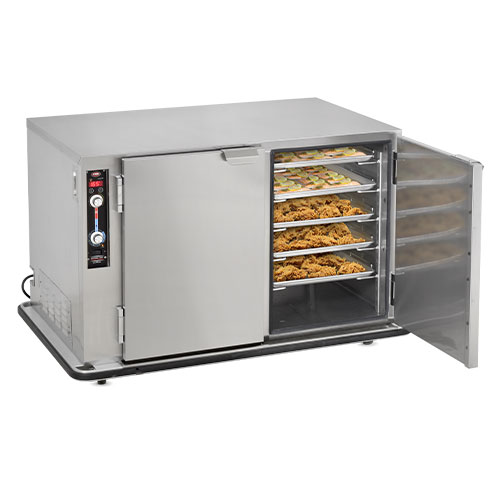
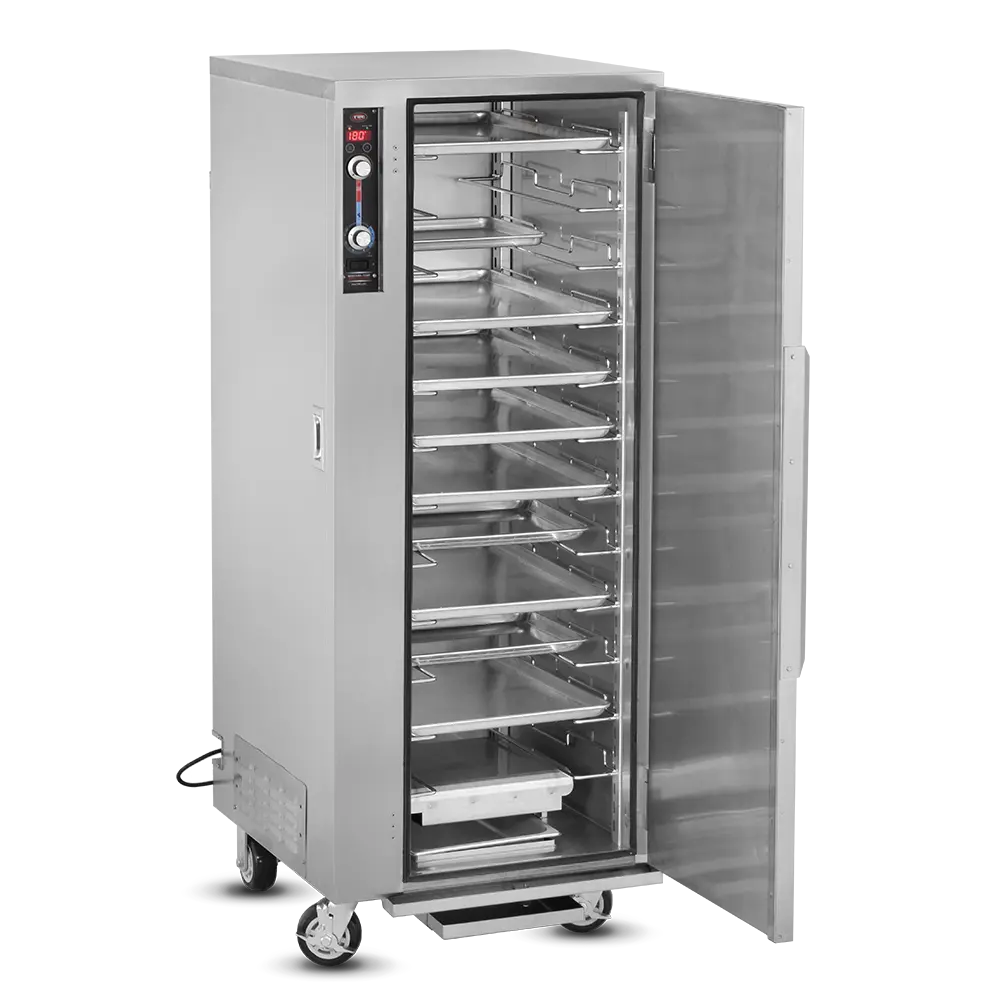
A commercial food warmer, or heated holding cabinet, is essential in any busy foodservice operation because cooking food is only half the battle. Keeping food hot, safe, and ready to serve is just as critical. Choosing how you hold food between cook and serve is not just a workflow decision. It directly impacts quality, yield, and consistency. In high-volume environments like schools, healthcare, stadiums, catering, and restaurants, different holding approaches can produce very different results.
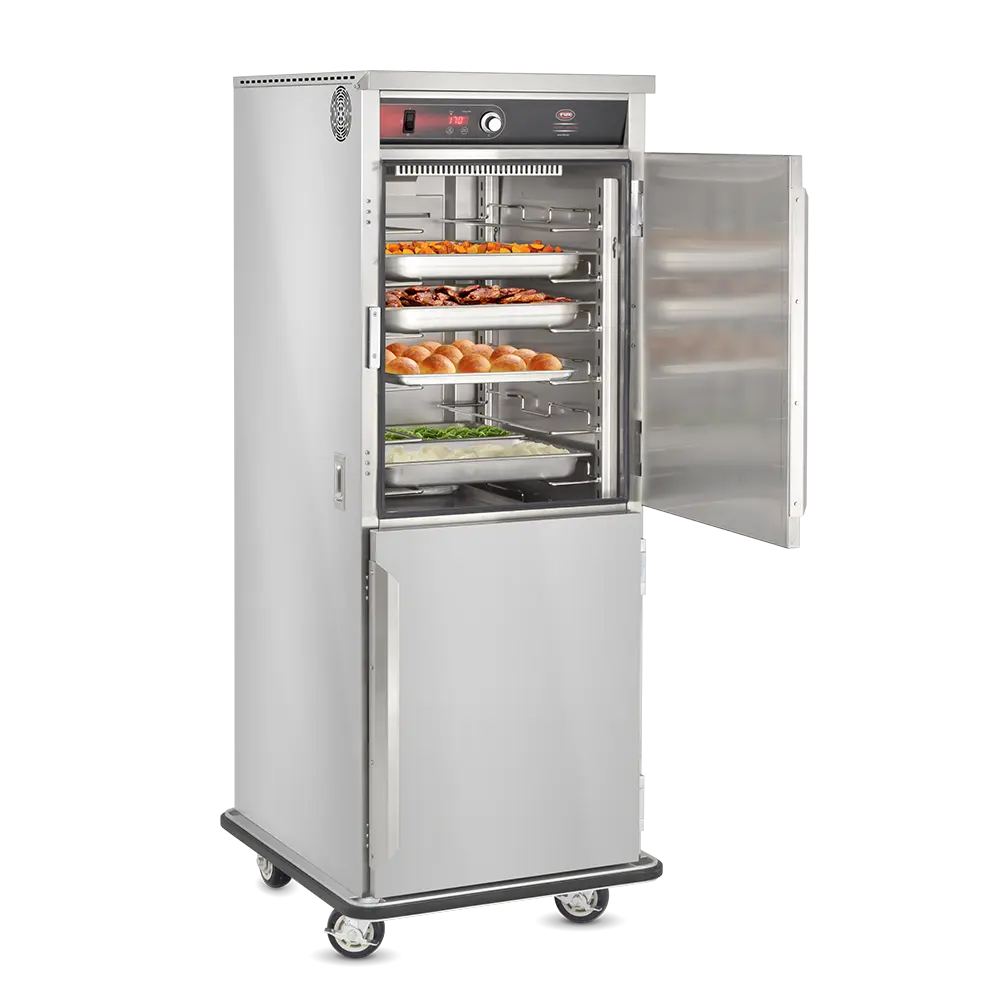
One of the most versatile solutions is the warming box, also known as a food warming box, hot box, or holding cabinet. Commercial food warming equipment generally falls into three primary categories: Dry, Humidified, and Precision.
- Dry Holding: Ideal for short holding times, covered products, and items where crispness and texture are key.
- Humidified Holding: Adds controlled moisture to extend food quality during multi-hour holds; requires routine water maintenance.
- Precision Moisture Holding: Allows operators to set and maintain specific temperature and humidity levels for mixed menus and consistent, repeatable results.
Understanding heating technology is important. Now, let’s focus on how to evaluate which commercial food warming approach best fits your operation.

Dry Heat
How It Works
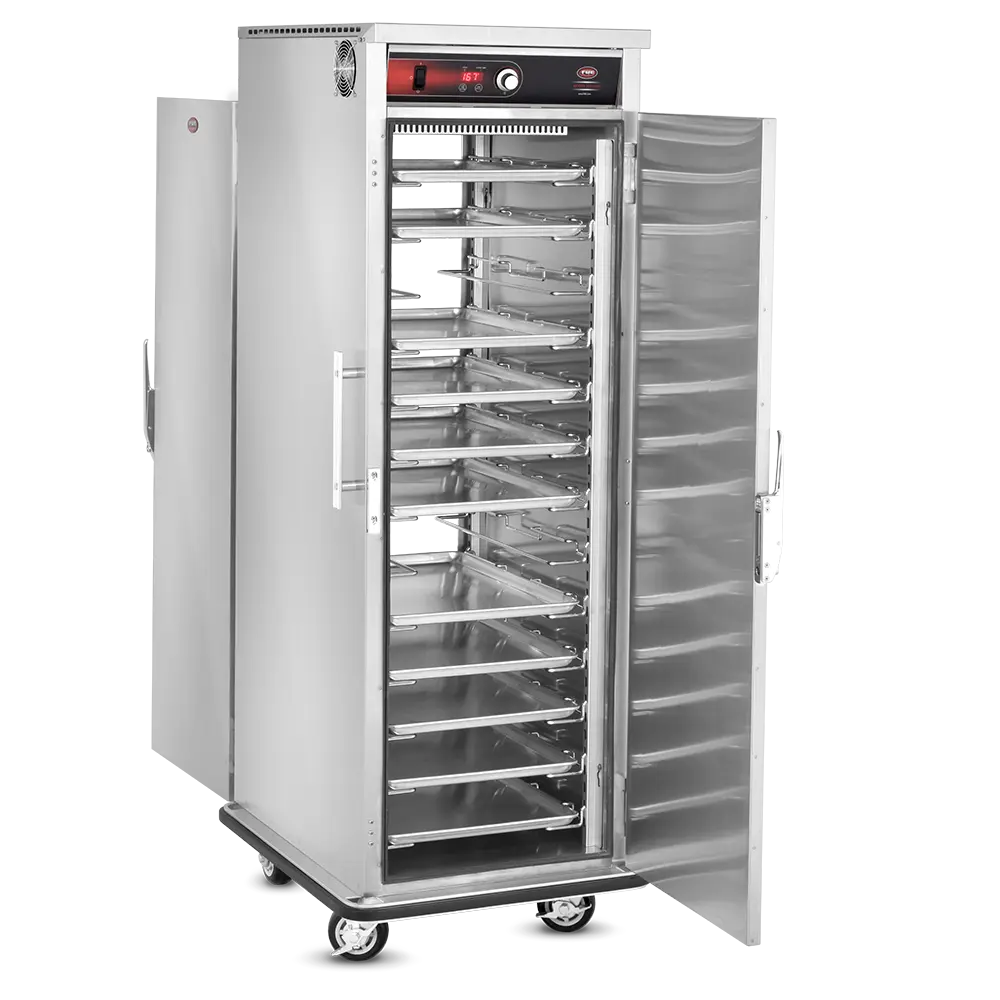
Dry cabinets use electrically heated elements to maintain the cabinet at serving temperature. Because no moisture is introduced, the environment stays dry. That dry environment slows the “softening” that can happen when humidity builds, which is why dry holding is commonly used for covered foods and items where crispness matters. Temperature is set by the control, and the cabinet holds product by maintaining steady heat around the pans or trays.
Heating Element Note: Heating element design varies by product line and application. Across FWE hot holding equipment, heating can be delivered using multiple element styles, including:
Radiant Blanket Elements (even surface-style heat)
Tubular Heating Elements (traditional calrod-style elements)
Infrared Heating Elements (radiant energy for surface heating)
Forced-Air Heated Systems (heated air moved with circulation)
Combination Designs (element style and placement varies based on cabinet purpose and configuration)
How Dry Heat Affects Food
Dry holding supports temperature maintenance while allowing moisture to gradually migrate out of exposed product over time. In practice, this usually means:
Crispy Items Stay Crisp Longer than they would in a humid cabinet.
Covered and Wrapped Foods Hold Well because packaging reduces moisture loss.
Uncovered Foods Can Dry Out as hold time increases, especially proteins and starches that are prone to surface drying.
Where It Fits Best
(Real-World Use Cases)
Short Service Windows: when you are cooking, staging, and serving in tight cycles and need hot product ready without managing humidity.
Grab-and-Go and Packaged Product: boxed items, wrapped pans, or lidded hotel pans where the packaging does most of the moisture retention work.
Crisp-Forward Menus: breaded proteins and fried sides that need a drier environment to protect texture.
Simple Operations: kitchens that want heated holding with minimal routine steps beyond loading, setting the temperature, and cleaning.
Operational Considerations
(What Operators Should Plan For):
Loading Strategy Matters: uncovered product will lose moisture faster. Covered pans, lidding, and wrapping can extend hold quality significantly in a dry cabinet.
Menu Segmentation Helps: many operations use dry holding for crisp items and covered items, while reserving humidified or precision cabinets for exposed moist foods and longer hold windows.
Daily Maintenance is Simple: no water system to fill, empty, or descale. Routine cleaning is typically focused on cabinet surfaces, slides, and door gaskets.
Trade-offs
To sum everything up, Dry Heat is simple, durable, and great for short holds. However, with no added humidity, uncovered foods can gradually dry out during longer holds. Dry heat is generally not ideal for multi-hour, uncovered holding when texture and yield must be preserved.
Humidified Heat
How It Works
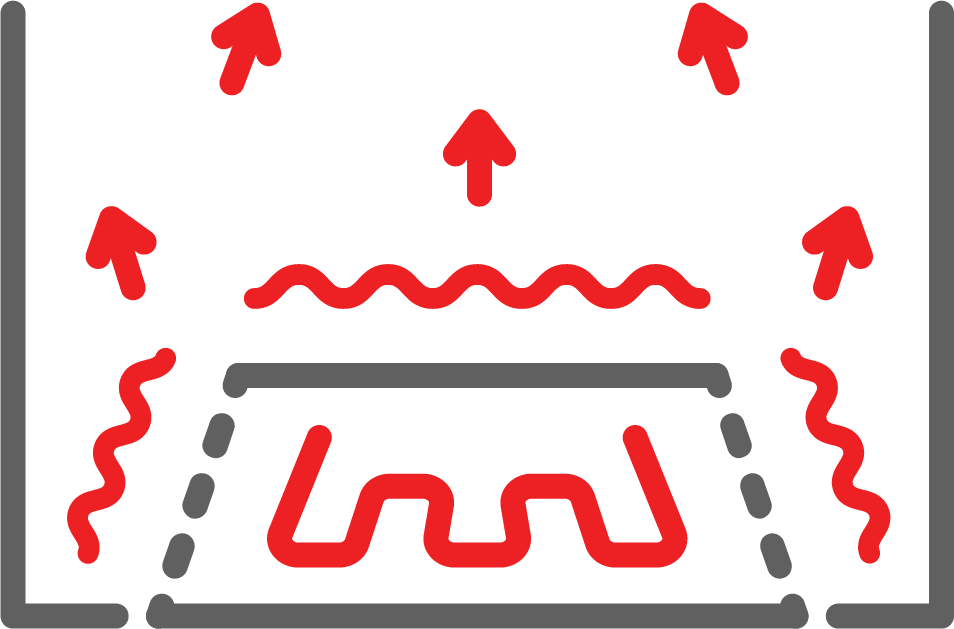
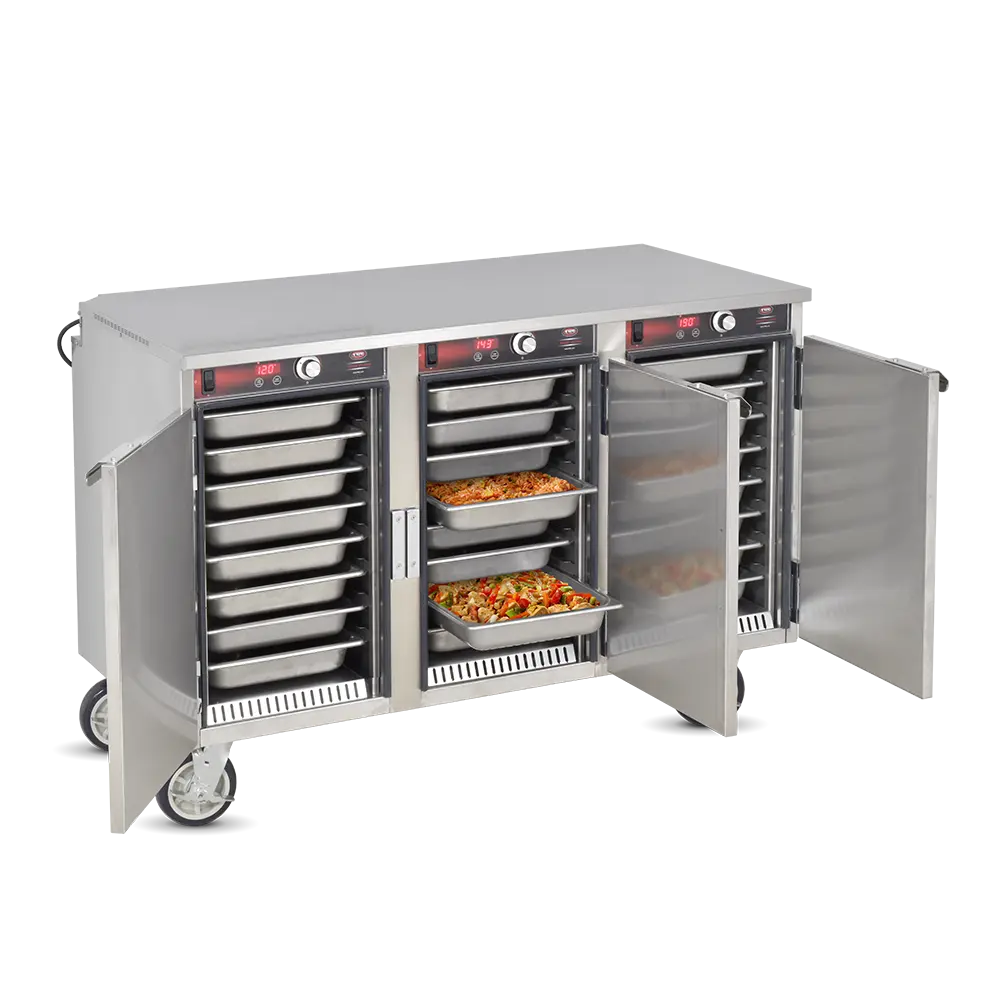
Humidified Holding Cabinets use electrically heated elements to maintain the cabinet at serving temperature just like normal Heated Holding Cabinets, while also introducing moisture into the holding space. That added moisture helps reduce the drying that can occur when food is held uncovered, which is why humidified holding is often used for foods where tenderness, yield, and overall appearance matter. Temperature is set by the unit’s control, and humidity is managed through the cabinet’s water-based system to support a more moisture-friendly holding environment around the pans or trays.
Moisture is introduced through a water pan humidity system. A removable pan holds water inside the cabinet, and a heating element warms that water to create humidity in the holding environment around the pans or trays. These cabinets use two controls, one to set the holding temperature and one to adjust humidity on a 1 to 6 scale. This gives operators a simple way to have control over the holding environment by adjusting heat and moisture independently, while a more precise holding control is covered in the next section.
How Humidified Heat Affects Food
Humidified holding supports consistent holding temperatures while helping slow moisture loss from food over time. In practice, this usually means:
Uncovered Foods Hold Better because the added humidity helps protect moisture and reduces surface drying over time.
Moist Foods Stay More Appealing since humidity supports better texture and appearance for items that are meant to stay tender rather than crisp.
Crisp Items May Soften Faster because the added humidity keeps the cabinet air moist, so crispy coatings and crusts absorb moisture instead of staying dry. Over time, that moisture works into the surface and the texture shifts from crisp to softer and less crunchy.
Where It Fits Best
(Real-World Use Cases)
Humidified Heat is a good choice when your goal is to keep food hot while protecting moisture and texture, especially when product is held uncovered. Situations where this type of heat system is commonly used is:
Longer Holding Windows: when food needs to stay service-ready beyond short turns without drying out. The added humidity helps slow quality drop-off as hold times stretch.
Uncovered Pan Holding: for hotel pans and trays where product is exposed to the cabinet air. Humidity helps reduce surface drying, which can keep portions looking and serving more consistently.
Moist, Tender Menu Items: like proteins, cooked grains, casseroles, and sauced foods that can dry out during holding. Added humidity helps protect texture and presentation without the complexity of a precision-controlled system.
Back-of-House Staging: when batches need to be held hot and ready before they hit the line. This is especially helpful during rush periods when you want the first and last serving from a pan to be closer in quality.
Operational Considerations
(What Operators Should Plan For):
Humidified heat is straightforward to run, but a few habits make a big difference in results and consistency:
Water Level Matters: humidity output can taper as the pan gets low, then stop once the pan runs dry. Keeping the pan properly filled helps the cabinet produce steadier humidity during holding.
Use the Humidity Dial with Intent: Since the humidity control is a 1–6 scale. Higher settings can help protect moisture on uncovered foods, while lower settings can help avoid softening of crispy food items that should stay firmer.
Plan for Simple Daily Upkeep: The water pan needs regular attention, whether that is refilling or cleaning the pan, a routine of care needs to be developed to keep performance consistent and to prevents buildup over time.
Trade-offs
Humidified heat is a solid middle ground for operations that need moisture protection without stepping up to precision-controlled systems. The main trade-off is that added humidity can soften foods that are meant to stay crisp, especially over longer holds. It also adds a simple water-related routine, since consistent performance depends on keeping the pan properly filled and clean.
Precision Moisture Control
How It Works
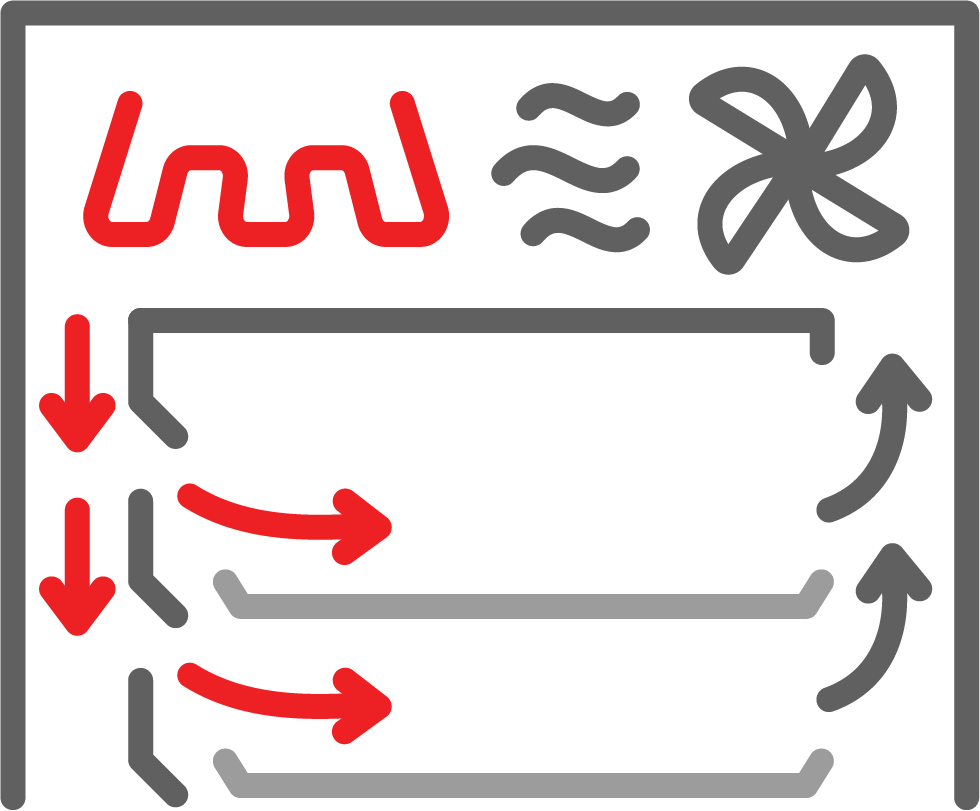
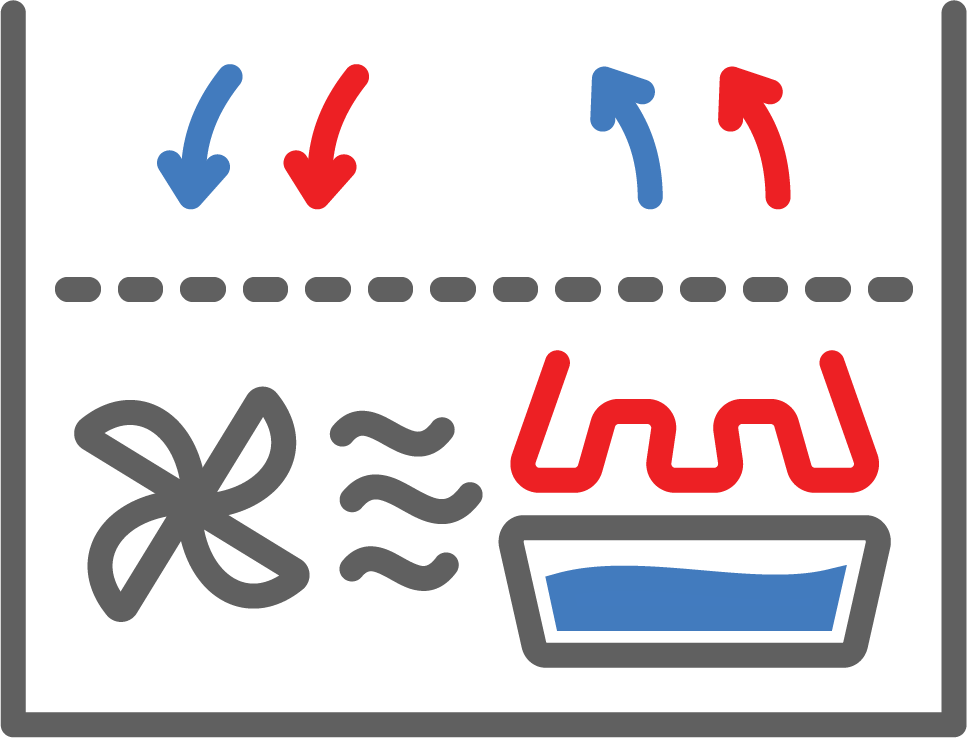
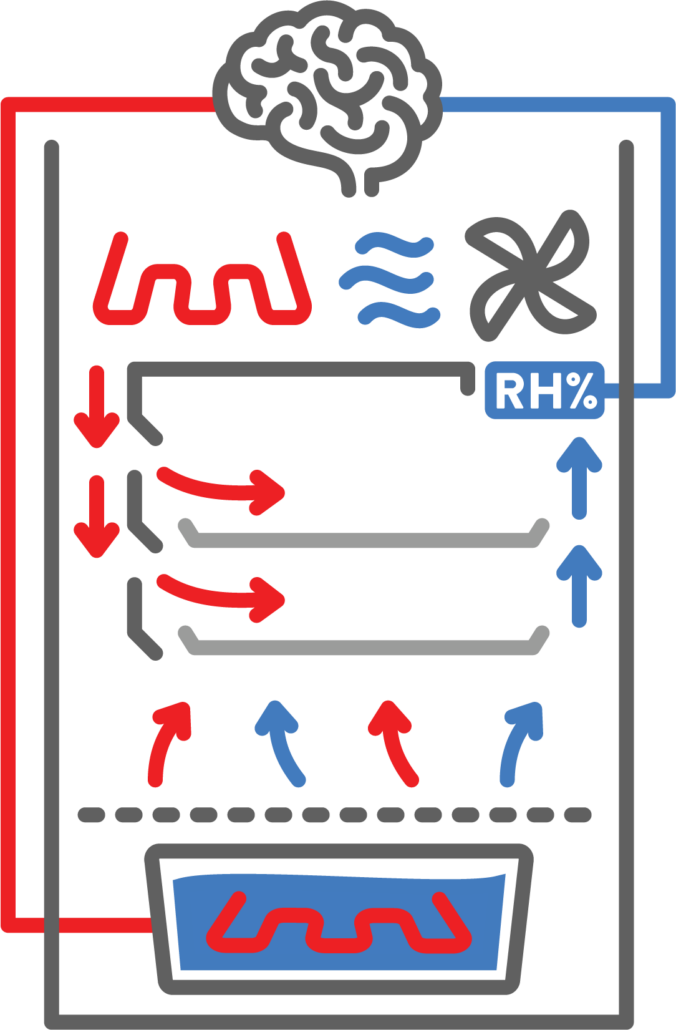
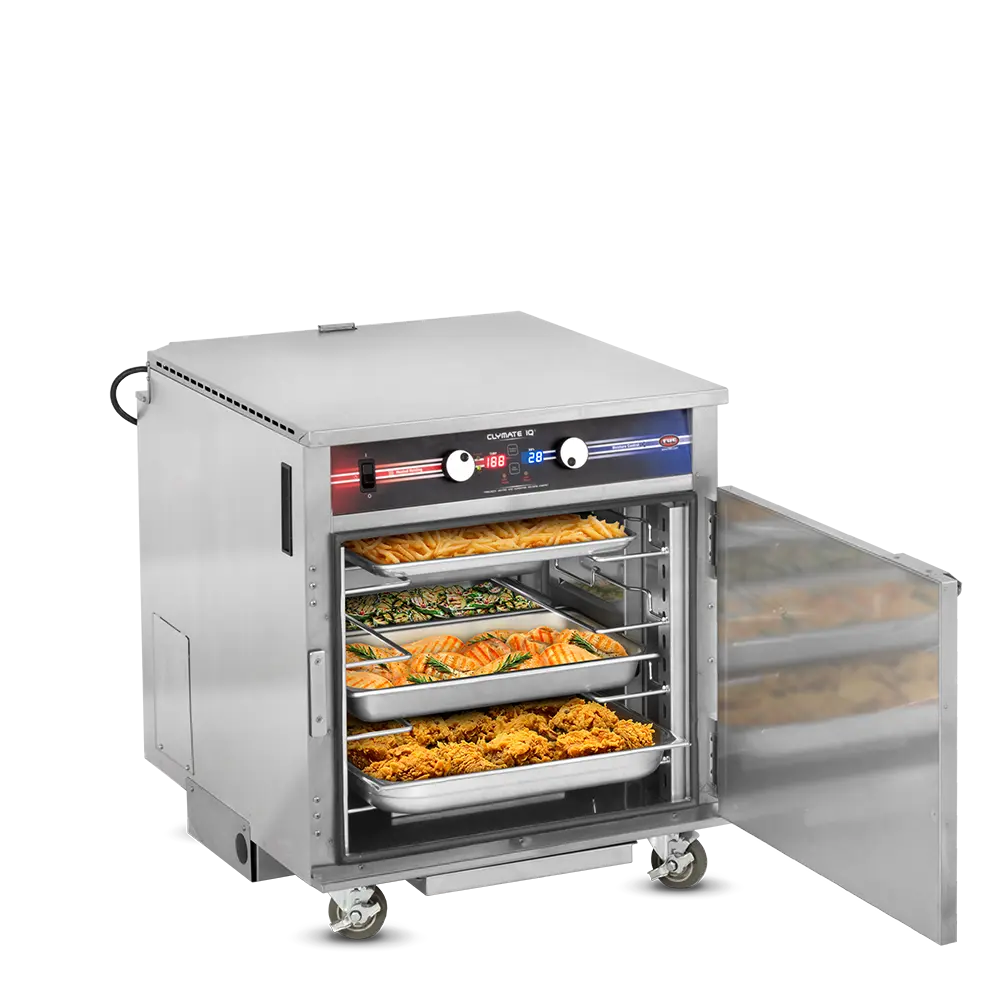
Precision Moisture Control Cabinets manage temperature and humidity as two separate setpoints using sensors and digital controls. You set a target temperature and a target relative humidity percentage, and the system automatically works to maintain those conditions during service, including fast recovery when doors are opened frequently.
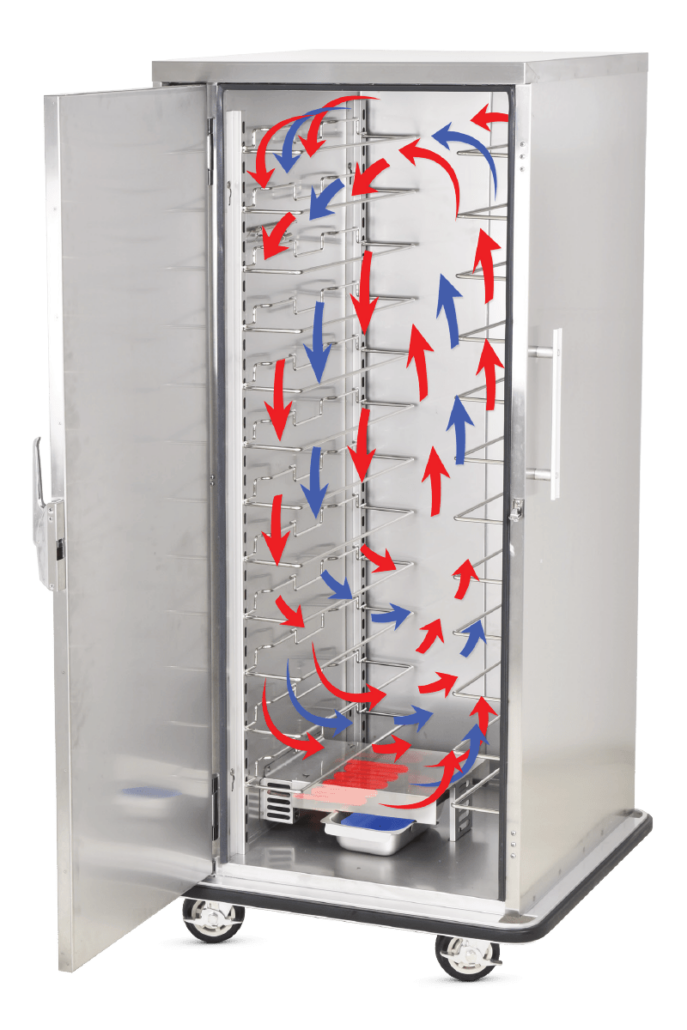
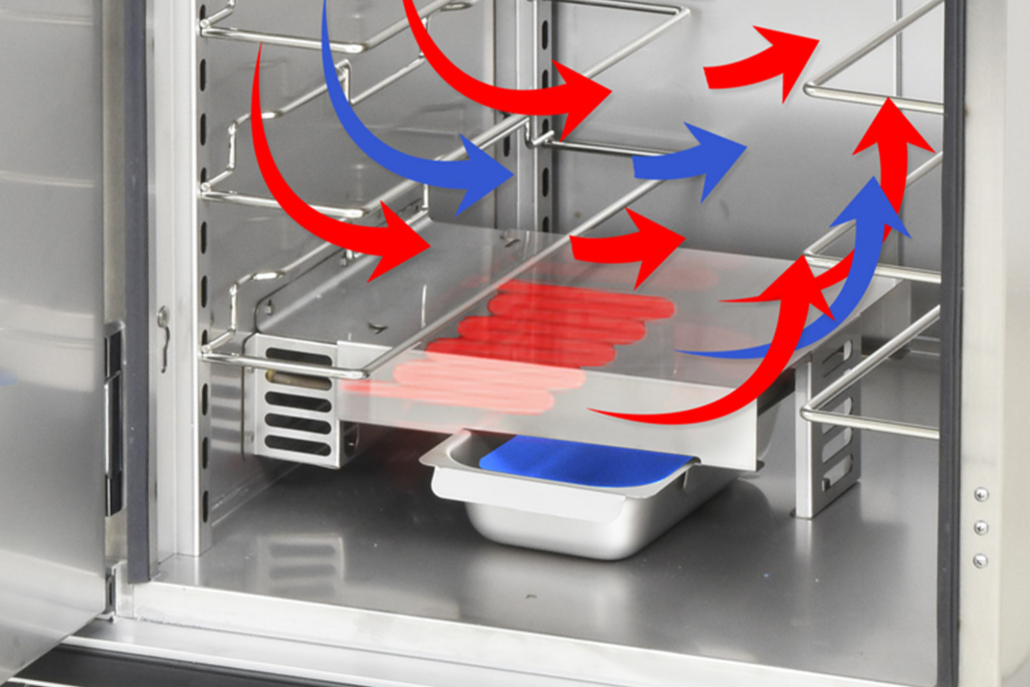
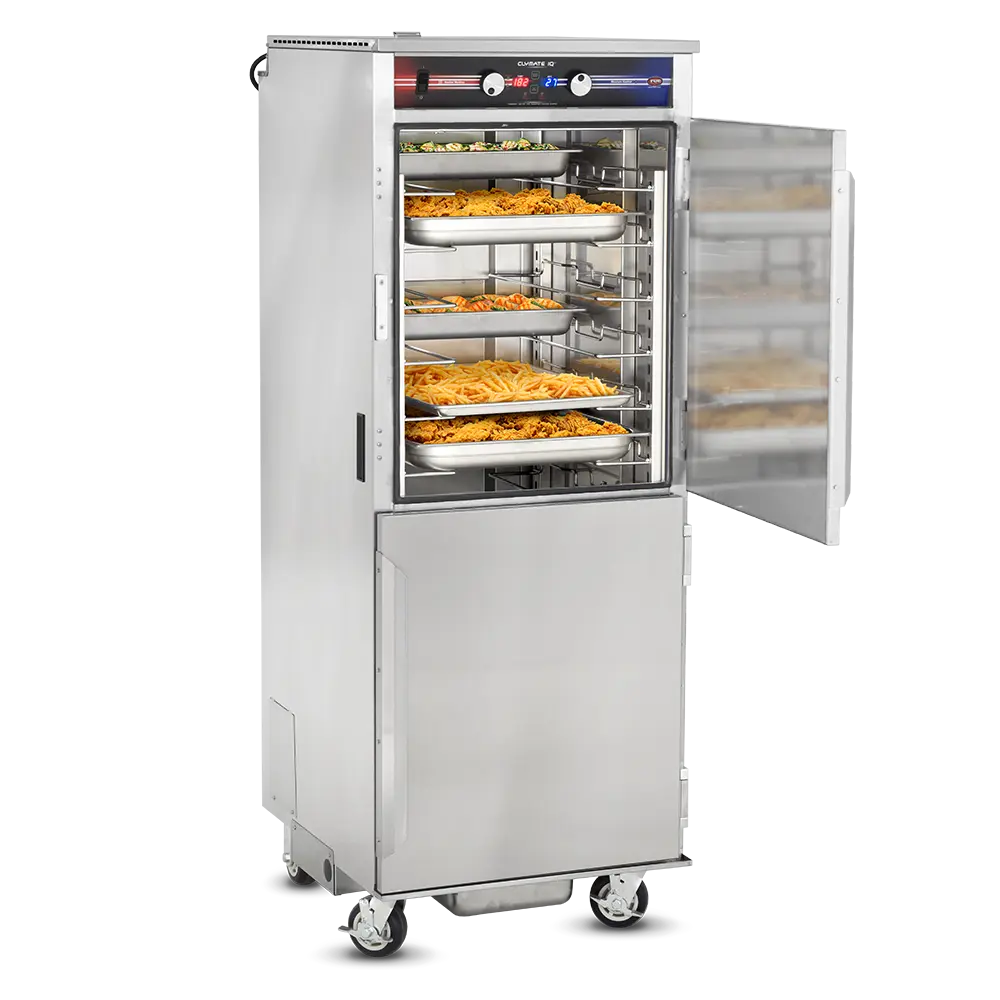
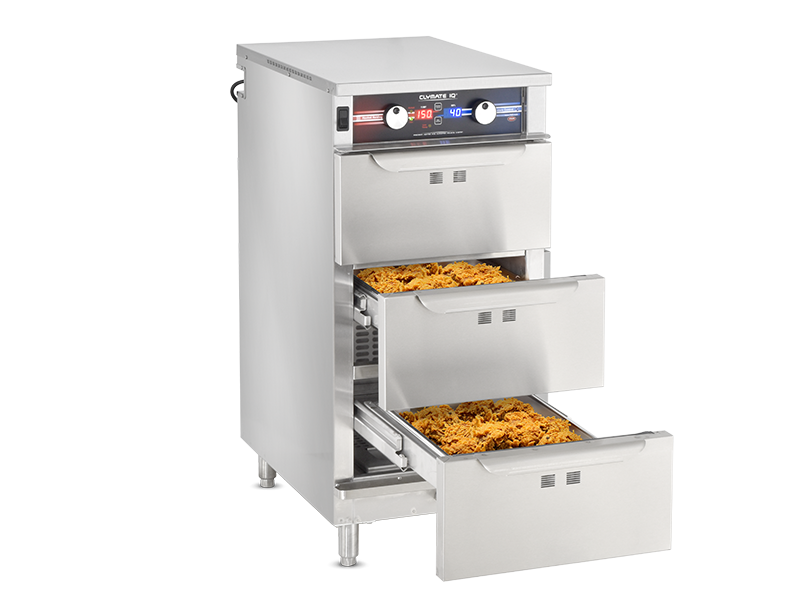
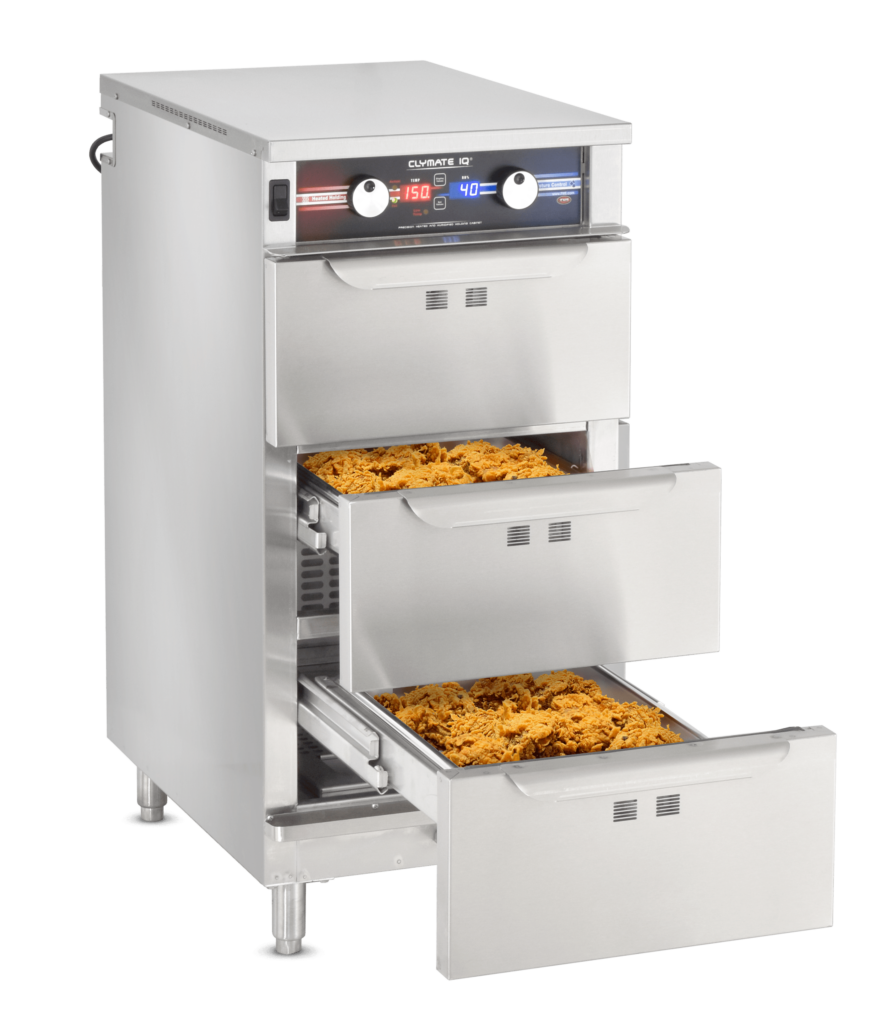
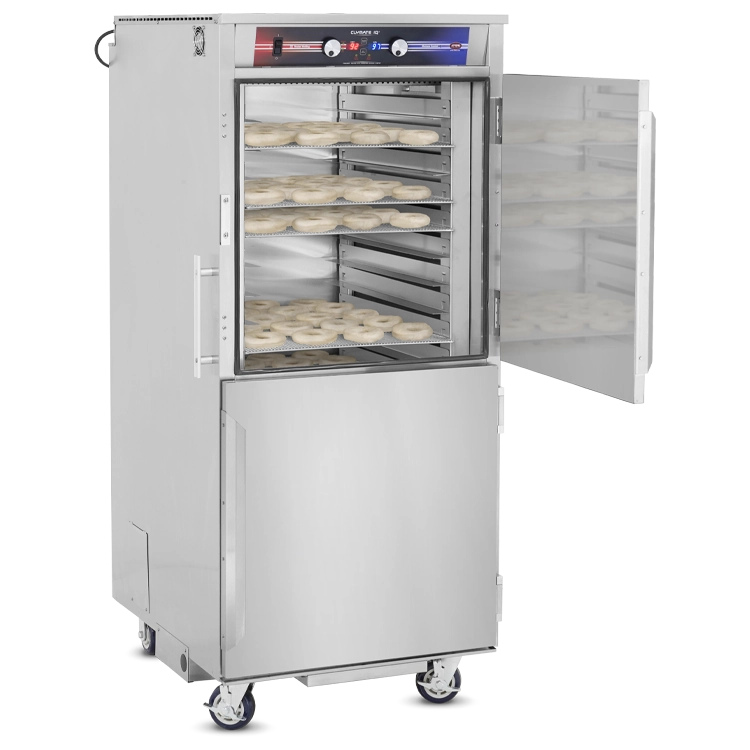
On ClymateIQ-equipped cabinets, the system provides precise temperature control from 90°F to 200°F (32°C to 93°C) and humidity settings from 0% to 90% RH. Humidity is generated using a removable stainless steel water reservoir with a dedicated heating element within the water, which helps the cabinet create and control moisture to match the humidity percentage you set. A circulating fan and the system’s push/pull air circulation distribute heat and moisture throughout the cabinet to help keep conditions uniform from shelf to shelf.
How Precision Control Affects Food
Precision moisture control is built to keep the holding environment stable and repeatable, which helps food stay closer to its intended texture and serving quality across longer holding windows and mixed menus. In practice, this means:
More Consistent Results: because you are setting specific temperature and humidity targets, and the cabinet automatically maintains those set levels of heat and humidity, reducing guesswork from shift to shift.
More Uniform Holding From Shelf to Shelf: because the push/pull air distribution system is designed to provide uniform temperature and humidity throughout the cabinet.
More Control Across Different Foods: because the system gives you a wide operating range, 90°F to 200°F (32°C to 93°C) and 0% to 90% RH, so you can dial in drier or more humid conditions depending on what you are holding.
Better Performance During Busy Service: because it is designed to maintain heat and humidity levels even during frequent door openings, with quick recovery to the user-set environment.
Where It Fits Best
(Real-World Use Cases)
Precision moisture control is best when you need repeatable results and want the cabinet to actively manage both heat and humidity during service, not just “add more or less moisture.” With independent temperature and humidity setpoints and a push/pull air circulation design, it is built to maintain the set environment through peak periods and help keep conditions uniform throughout the cabinet.
Consistency You Can Repeat: when you want operators to run the same targets shift after shift, using set temperature and relative humidity levels that the cabinet automatically maintains.
Longer Holds With Exposed Food: when product is uncovered and you need tighter control to help protect texture and moisture over extended holding windows, using humidity settings from crisp to moist.
Busy Service With Frequent Door Openings: when constant loading and pulling is part of the workflow and fast recovery matters, so you are not constantly chasing heat and humidity after every open.
Mixed Menus and “Sensitive” Items: when your holding cabinet needs to flex between drier and more humid conditions depending on what is inside, using independent temperature control (90°F to 200°F) and humidity control (0% to 90% RH).
Uniform Results Across the Cabinet: when shelf-to-shelf consistency matters and you want air distribution that is designed to keep heat and moisture even throughout the holding space.
Operational Considerations
(What Operators Should Plan For):
Precision moisture control is straightforward once it is set, but a few habits make a big difference in day-to-day results:
Preheat and verify actual conditions: the control panel shows PREHEAT while the unit is coming up to temp and it beeps when preheat is finished. The display alternates between ACTUAL and SET POINT until the setpoint is reached, and the Display Values button lets you check actual temperature and humidity (including checking whether the unit has reached the set moisture level).
Dial in water pan routine and water quality: humidity performance depends on the water pan. The manual recommends filling the water pan with hot water, not overfilling it, and watching the Low Water Indicator so humidity does not drop off as the pan gets low. It also recommends using distilled water, warns that non-distilled water can create mineral deposits (not covered under warranty), and says deionized water should not be used.
Keep cleaning simple and consistent: daily cleaning includes draining the water pan, wiping out debris, and cleaning the interior. If scale builds up on the pan or element area, the manual describes descaling with a vinegar and water solution or citric acid tablets, and it also suggests leaving the door slightly open during storage to prevent excess humidity between production cycles. It also cautions against steam cleaning or using excessive water on the unit.
Trade-offs
Precision moisture control systems typically come with a higher upfront investment than dry heat or basic humidified holding, and they also give operators more settings and control options to learn.
They also add a water-based routine. Performance depends on keeping the reservoir filled, watching for low-water conditions, and using the recommended water type. The PHTT manual notes that non-distilled water can lead to mineral deposits that are not covered under warranty, and it specifically warns against using deionized water.
For simpler menus and short holding windows, that added capability may be more than you need. But when consistency and repeatability matter, the trade-off is often worth it.
Choosing the Right Food Warmer for Your Menu
The right commercial food warmer is the one that matches your menu, your service window, and how your food is held (covered vs uncovered). Start with these quick checks:
- Covered or packaged vs uncovered: Covered product holds moisture on its own. Uncovered product loses moisture faster.
- Crisp vs moist: If crisp texture is the priority, humidity can work against you. If tenderness and yield matter, humidity helps.
- Simple control vs repeatable precision: A moisture dial is great for many kitchens. Set temperature and RH targets are best when consistency and repeatability matter.
Choose Dry Heat if:
- Your hold times are short: you are turning product quickly between cook and serve.
- Your food is mostly covered, wrapped, or packaged: the container does most of the moisture retention work.
- Crisp texture matters: breaded and fried items hold texture better in a drier environment.
- You want the simplest routine: no water pan to manage, just set temperature and run.
- Watch for: longer holds with uncovered foods can gradually dry out.
Choose Humidified Heat (Moisture-Temp) if:
- You need better moisture retention: especially for uncovered pans during longer service windows.
- You stage food before service: you want hot holding that helps protect texture and appearance while you wait for the line.
- You want simple, independent controls: set temperature and adjust moisture on a 1 to 6 scale.
- You are fine with a basic water routine: humidity depends on keeping the removable pan filled and clean.
- Watch for: crisp foods can soften as humidity increases.
Choose Precision Moisture Control (PHTT with ClymateIQ®) if:
- You want repeatable results: set a target temperature and a target RH and run the same setpoints shift after shift.
- Your menu is mixed or sensitive: different foods respond differently to heat and humidity, and you want tighter control.
- Your service is busy: frequent door openings and constant loading demand faster recovery and steadier cabinet conditions.
- You need true setpoint control: 90°F to 200°F and 0% to 90% RH, with independent controls for temperature and moisture.
- Watch for: higher capability comes with higher investment and a more intentional setup and water routine.
Talk To Our Professionals
Are you ready to get your project started or looking to learn more about FWE equipment? We are here to help! Our commitment to excellent customer service and creating customized equipment for all operations, no matter the footprint, is what we are known for. Don’t hesitate to give us a call at 1 (800) 222-4393 or Request A Quote and a member of our team will be happy to assist. As always, don’t forget to fill out the form below to stay up to date on all of the latest FWE news, product launches, and announcements.